Challenge
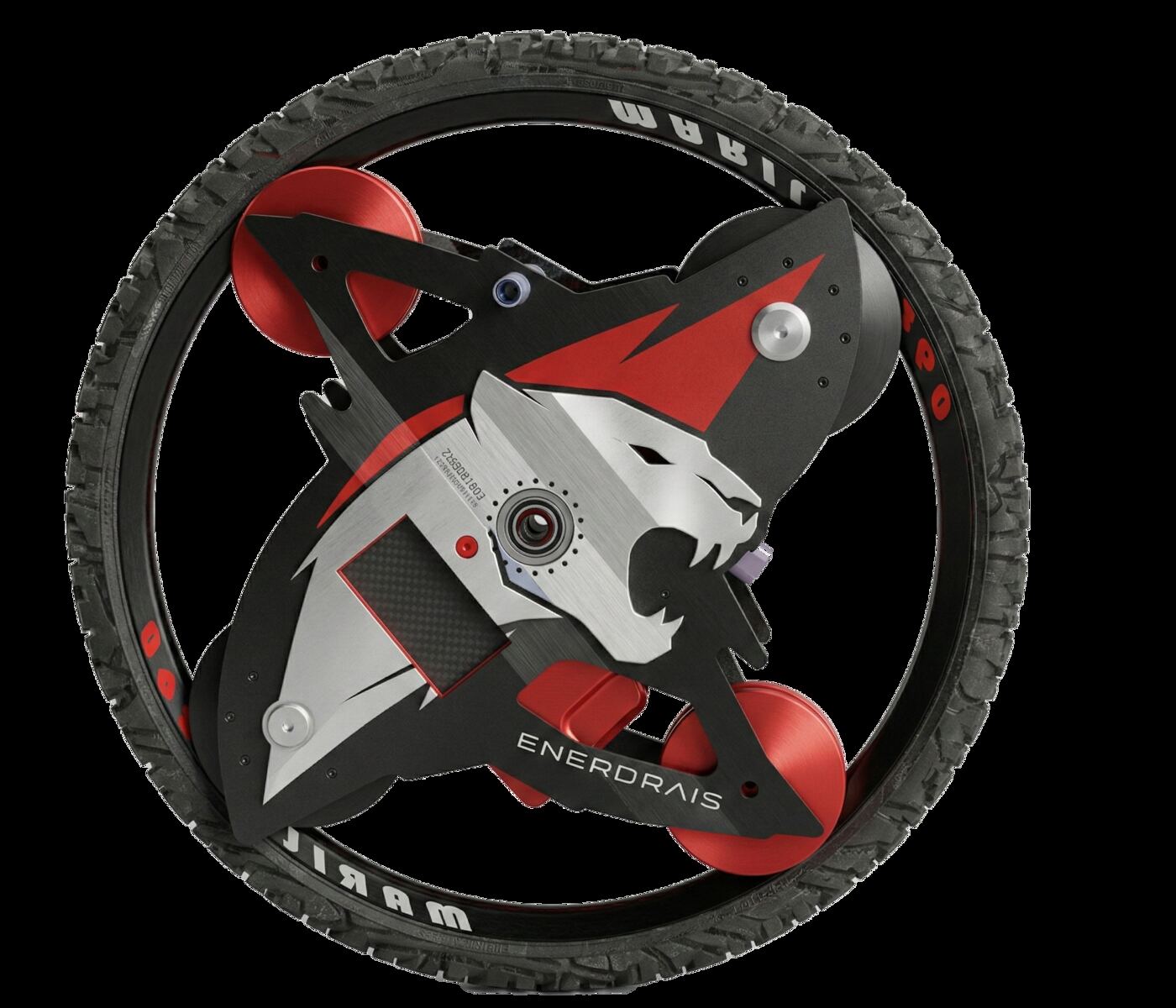
A mechatronic product with no face yet: it needed a mark, a voice for investors and a website that could carry a heavy 3D model.
Process
The mark went through named rounds before the system settled.
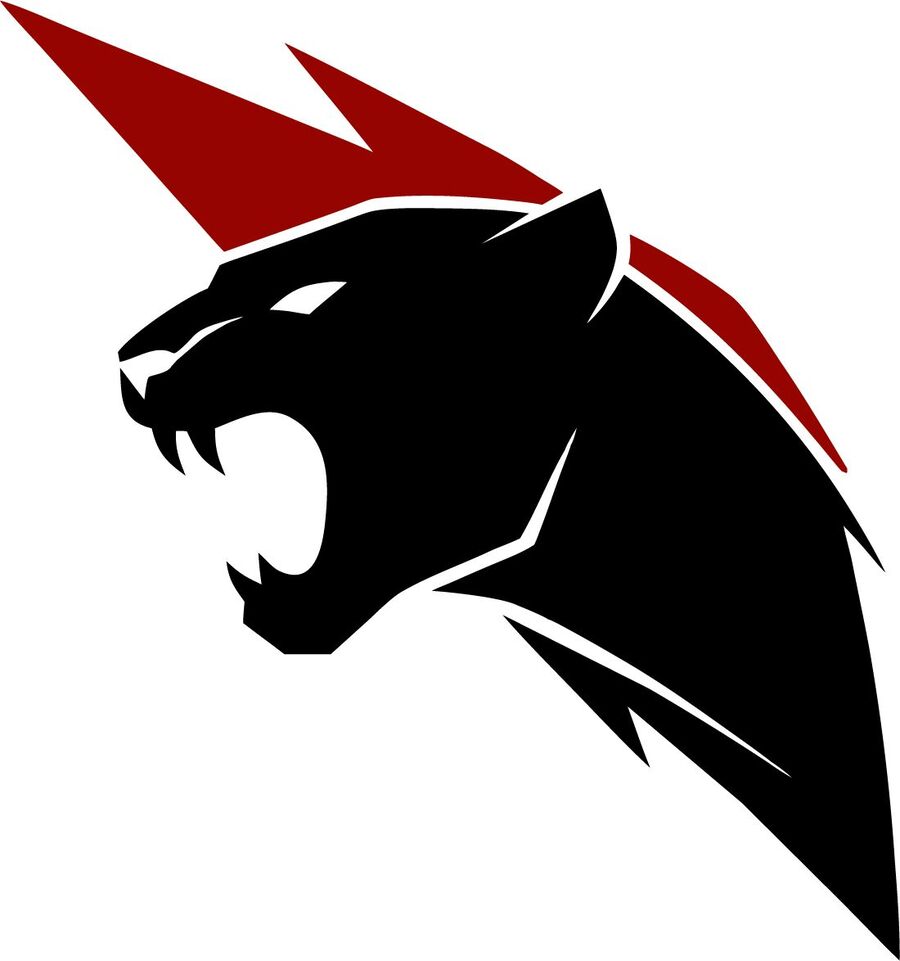
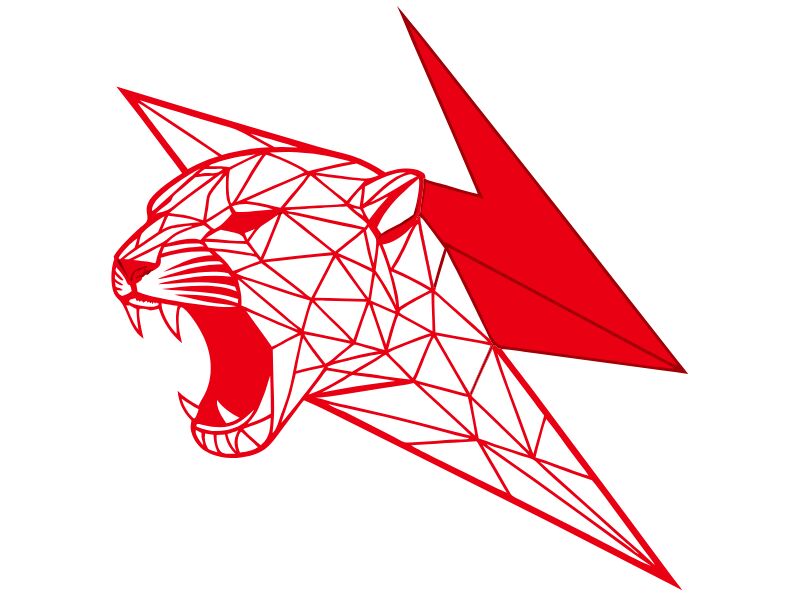
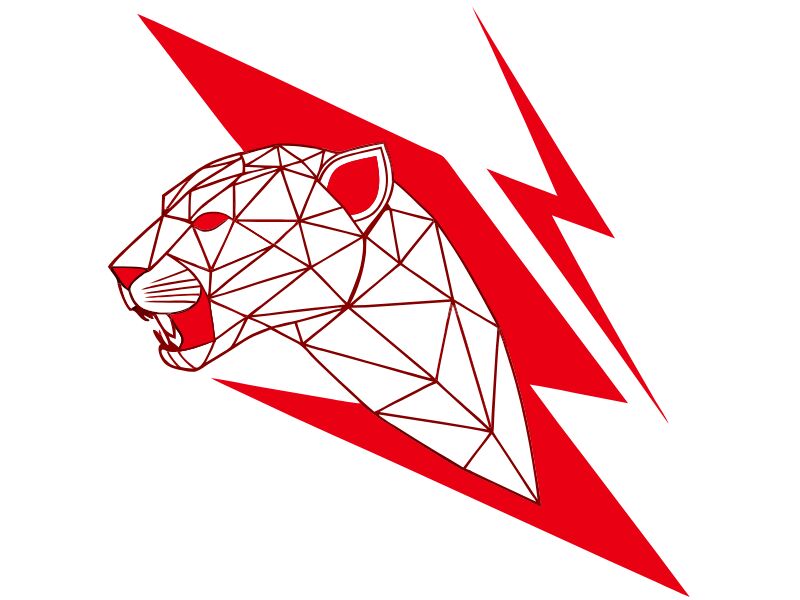
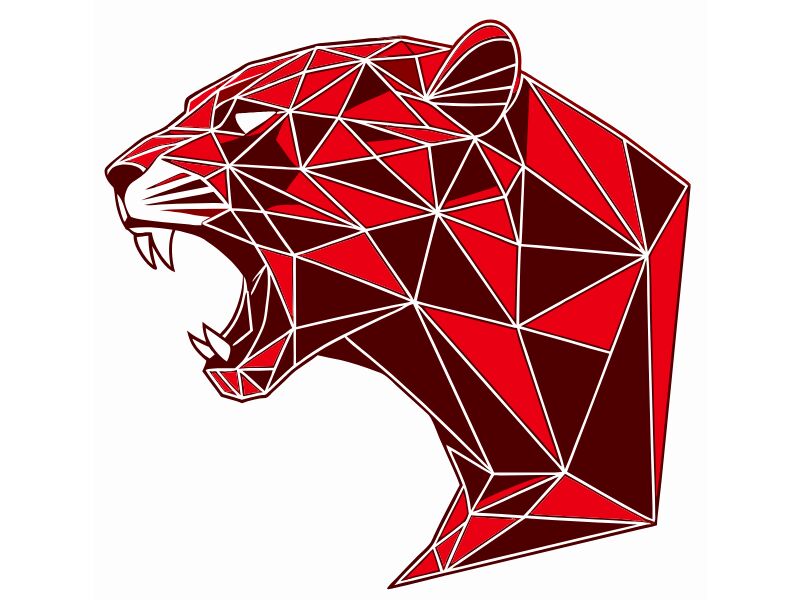
The Mark II jaguar is a solid silhouette with red bolts behind it. The "Material" series, numbered Mark I to V, explores the animal as a faceted wireframe fused with a lightning bolt, then as a woodcut tiger, then as a solid low-poly head. Mark II is the lockup on the live site.
Getting a CAD wheel onto a web page
The wheel came from SolidWorks at 65 MB and crashed the browser; the shipped model decodes in milliseconds.
The original export had 155 meshes and about 2.1 million vertices, enough to lose the WebGL context; merging it down to 10 meshes unblocked the GPU. Draco files were small (about 2.4 MB) but took seconds to decode, so the runtime model uses meshopt: 8.3 MB raw, about 4.2 MB gzipped, and it decodes almost instantly.
- enerdrais-wheel.glb65.2 MB
- enerdrais-wheel-final.glb2.5 MB
- enerdrais-wheel-runtime.glb8.3 MB
Solution
One jaguar, one red, two typefaces, and the wheel as the hero.
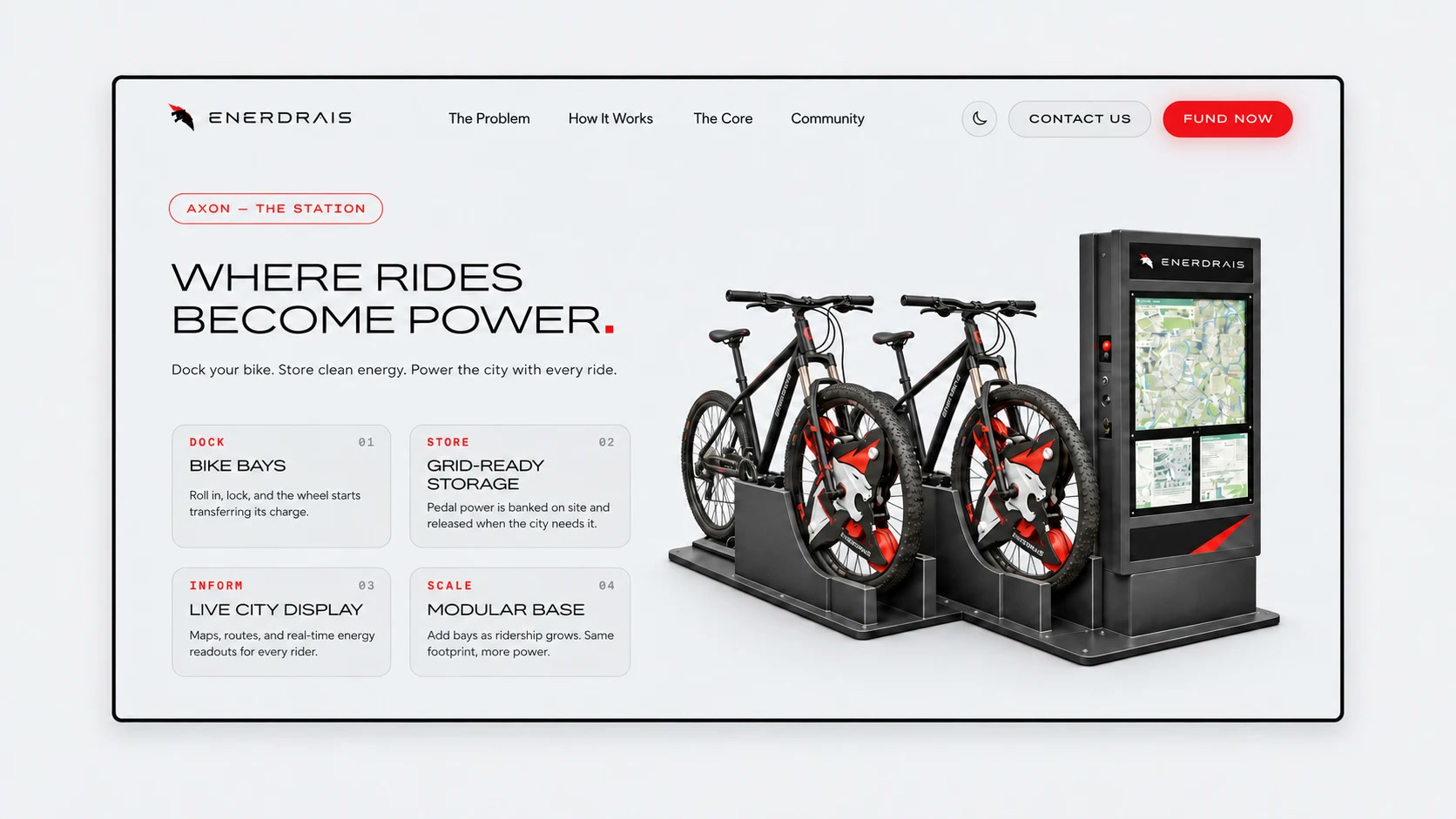
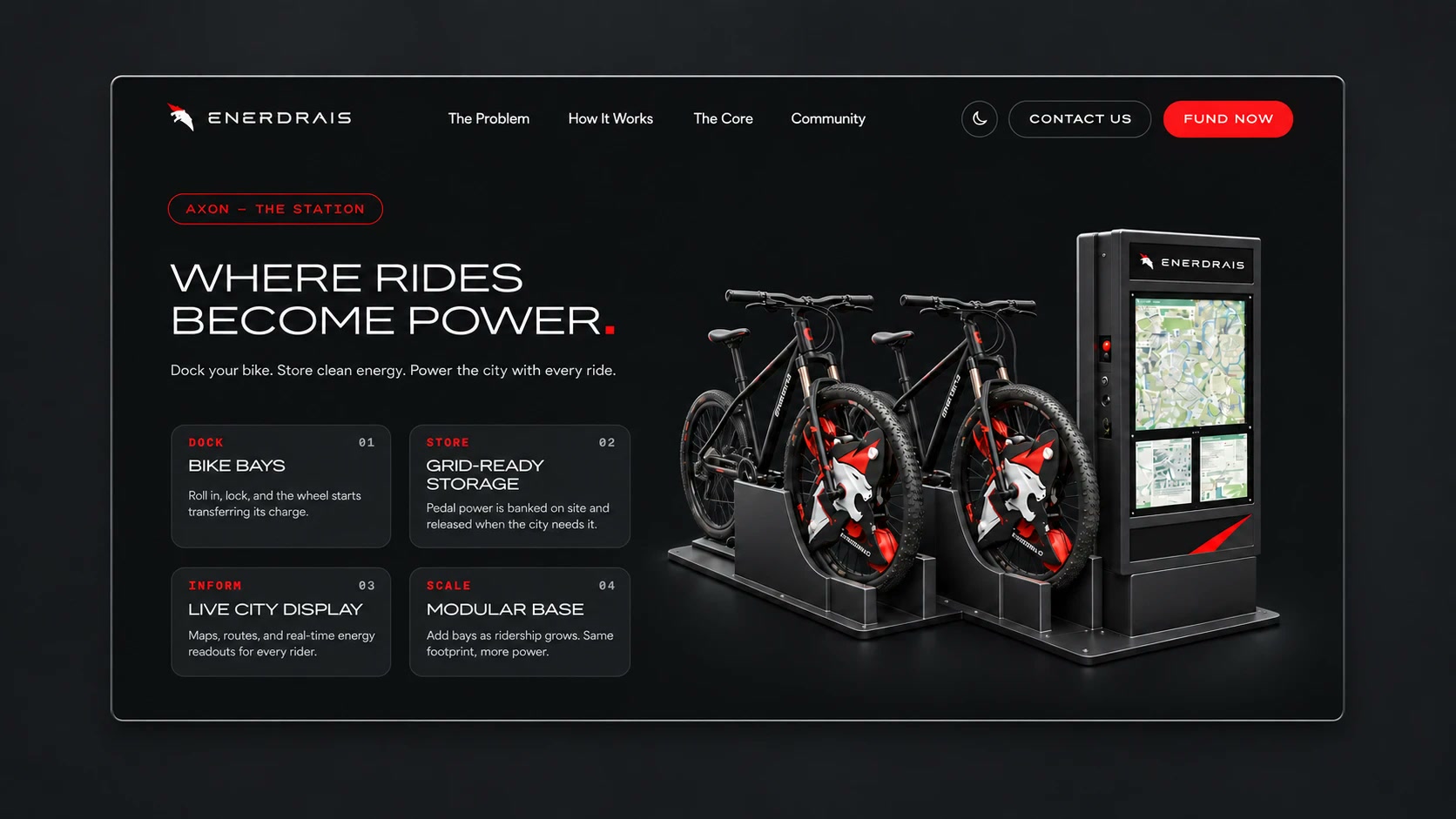
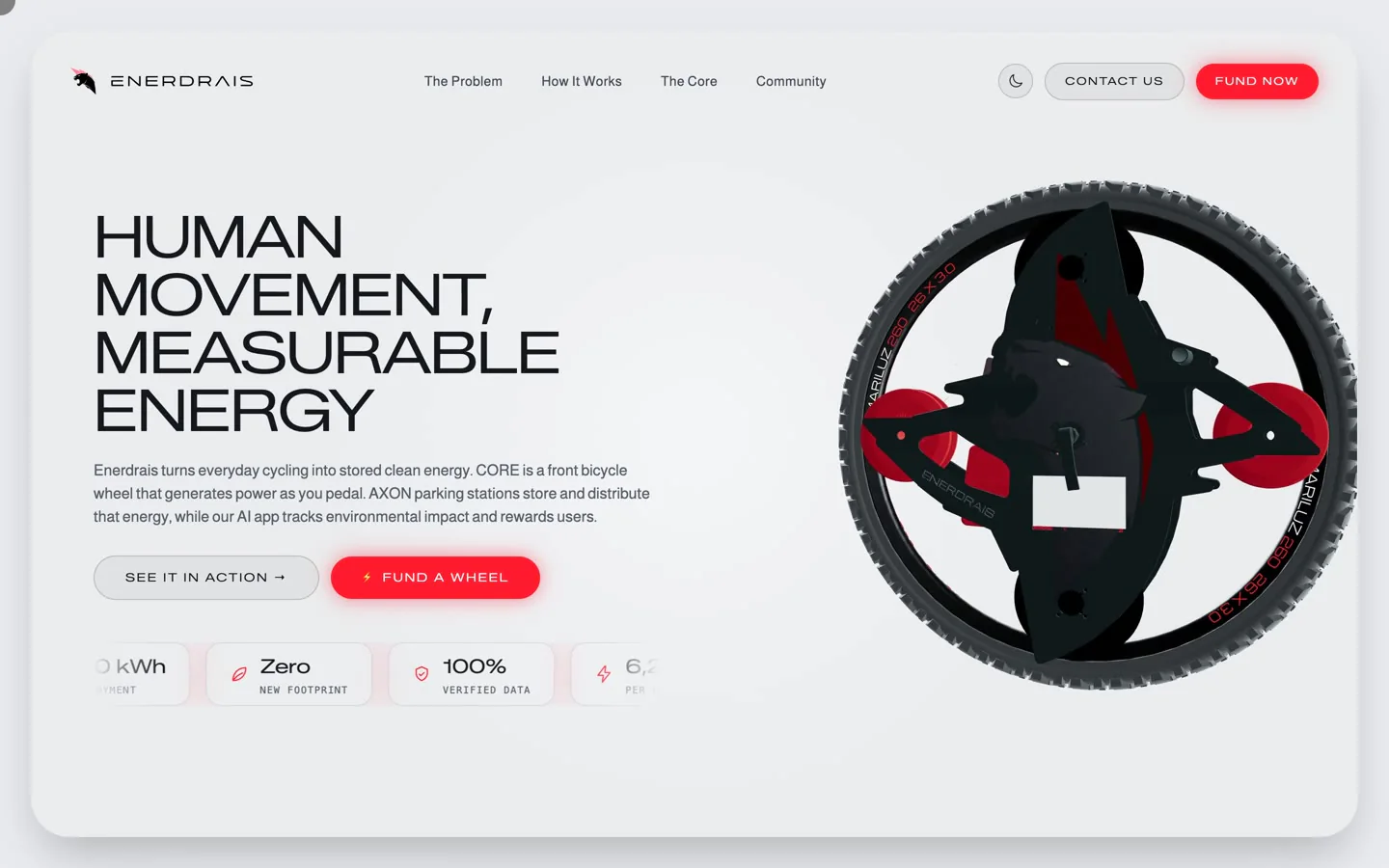
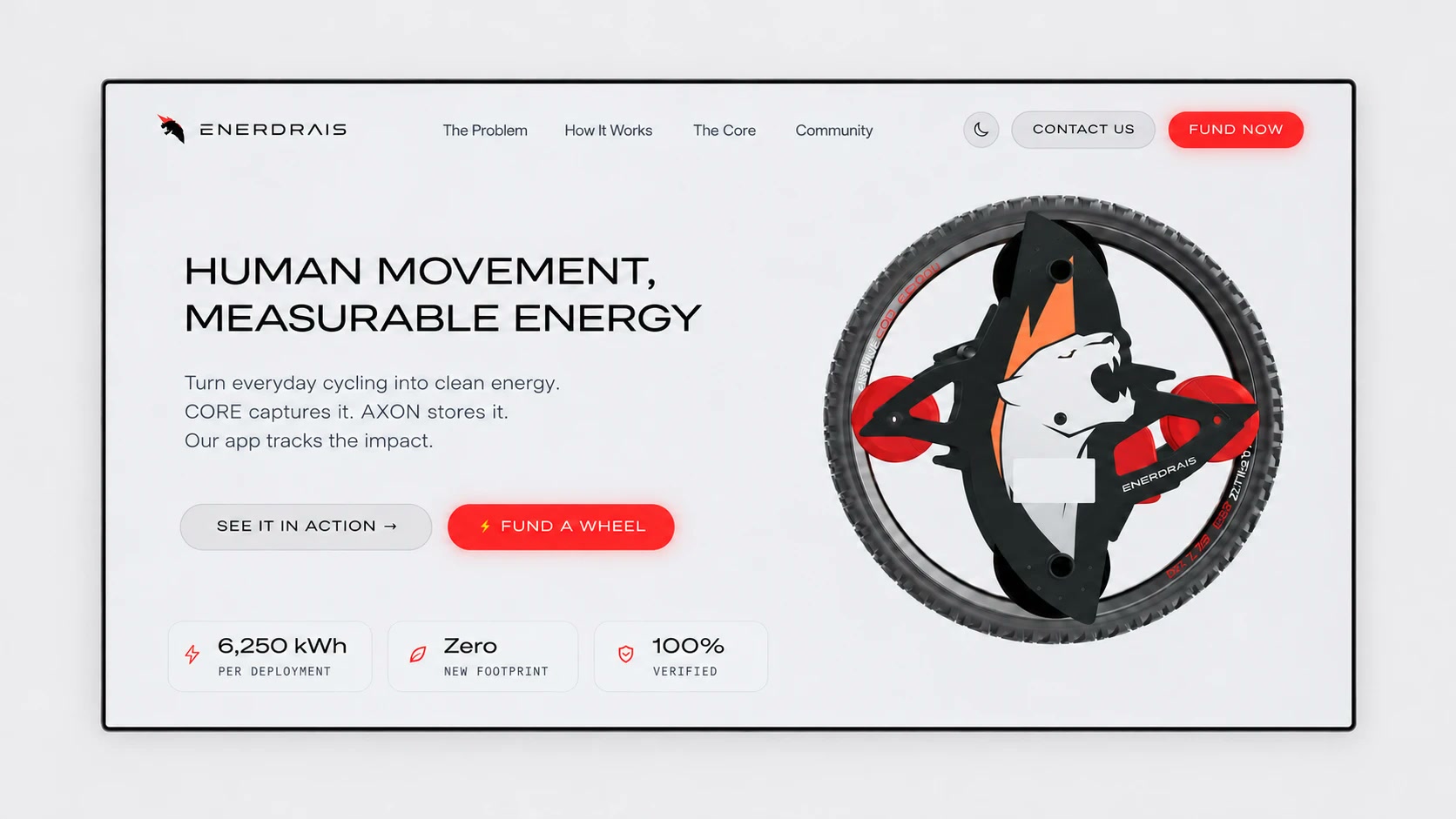
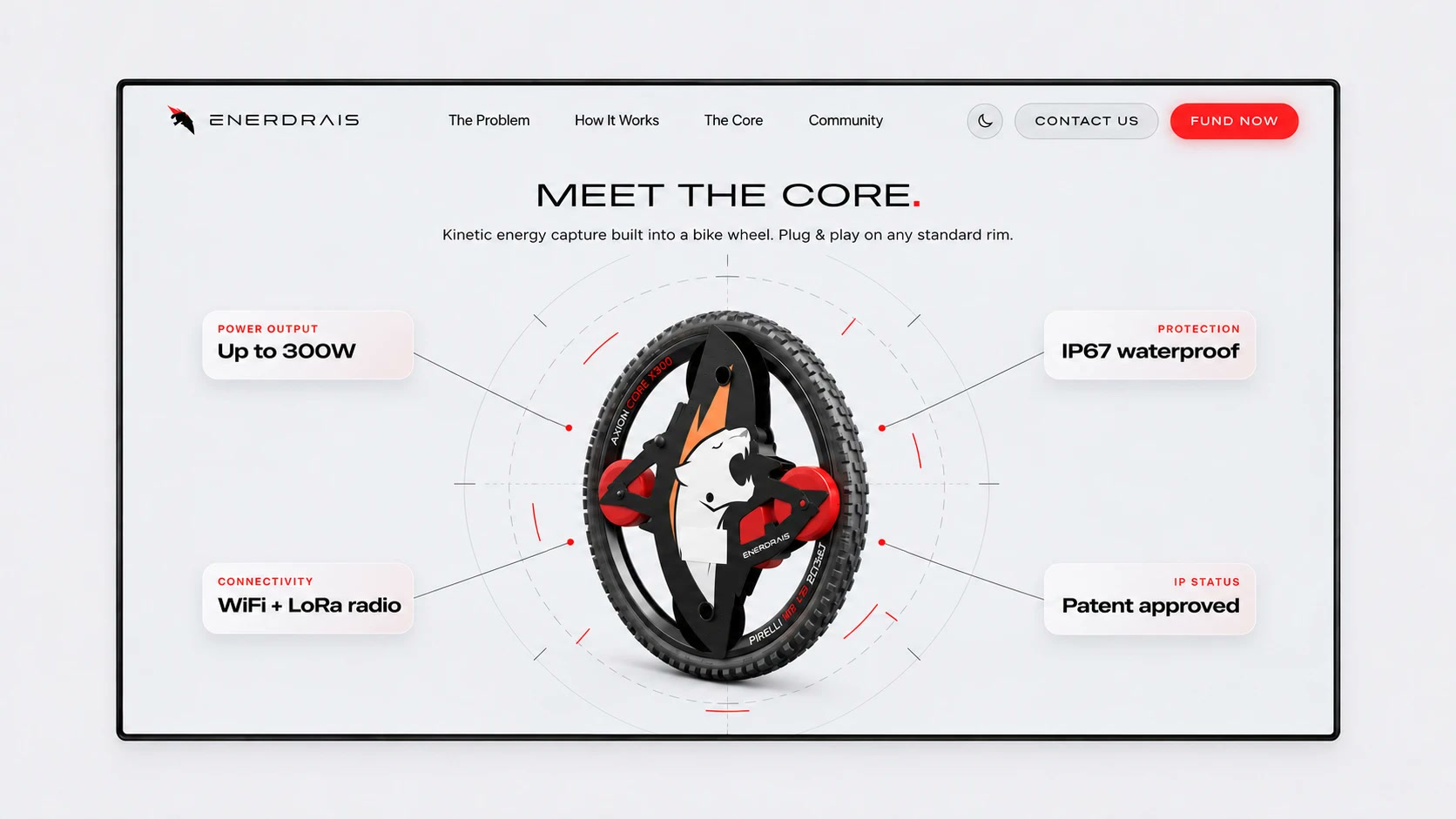
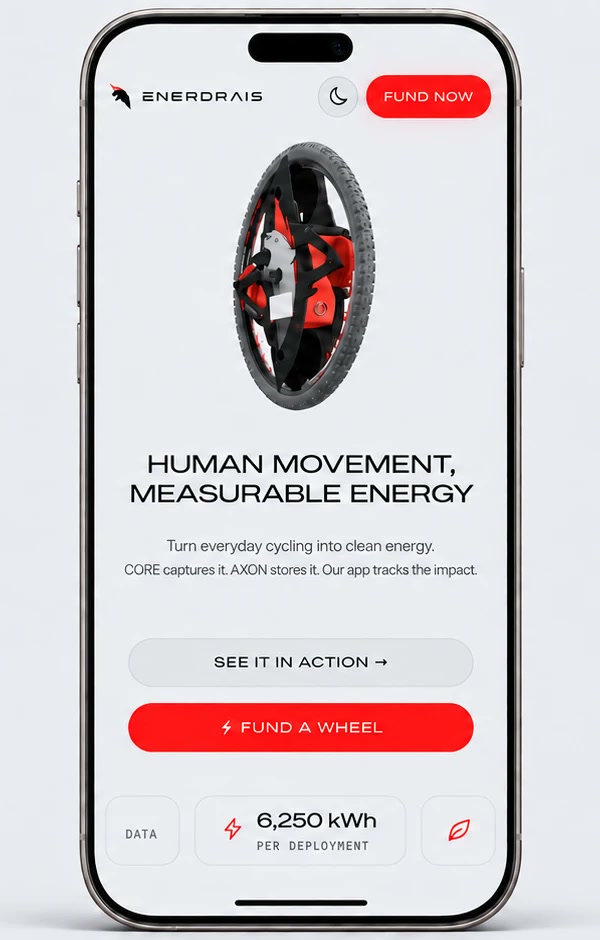
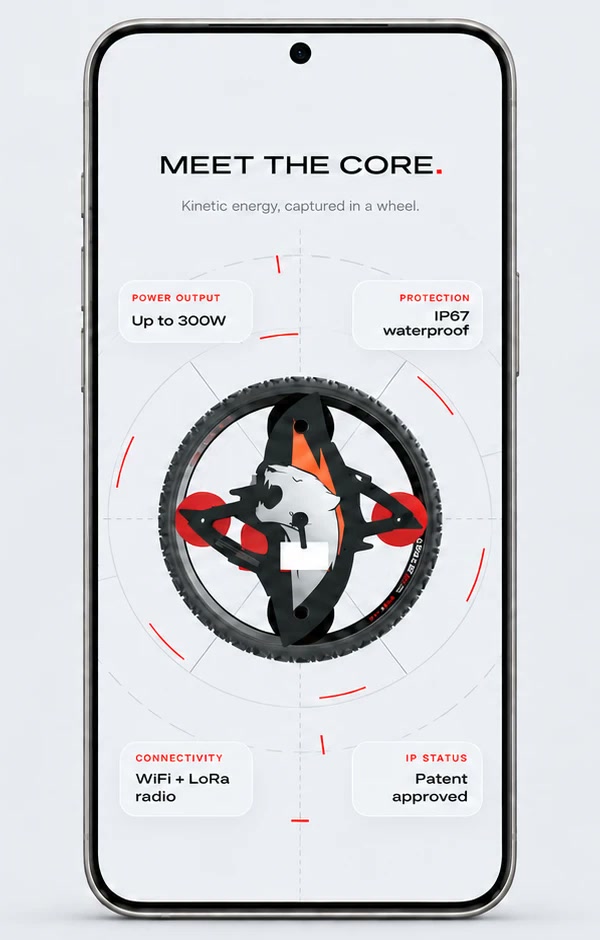
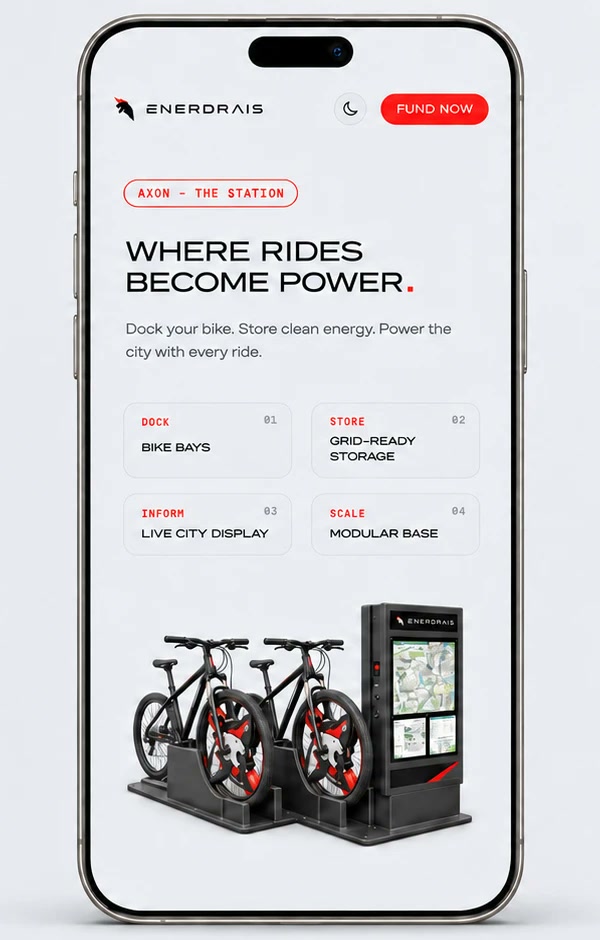
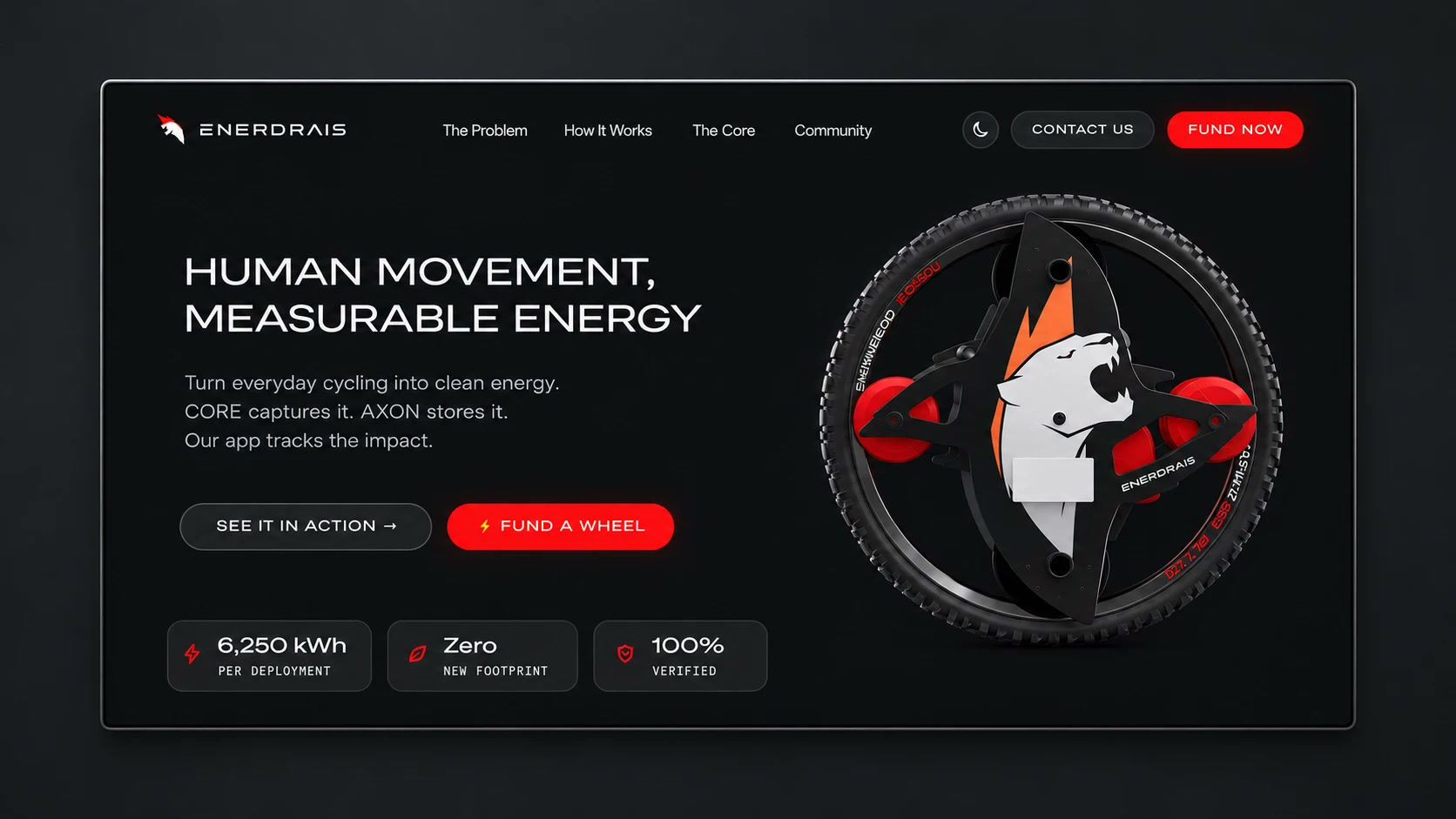
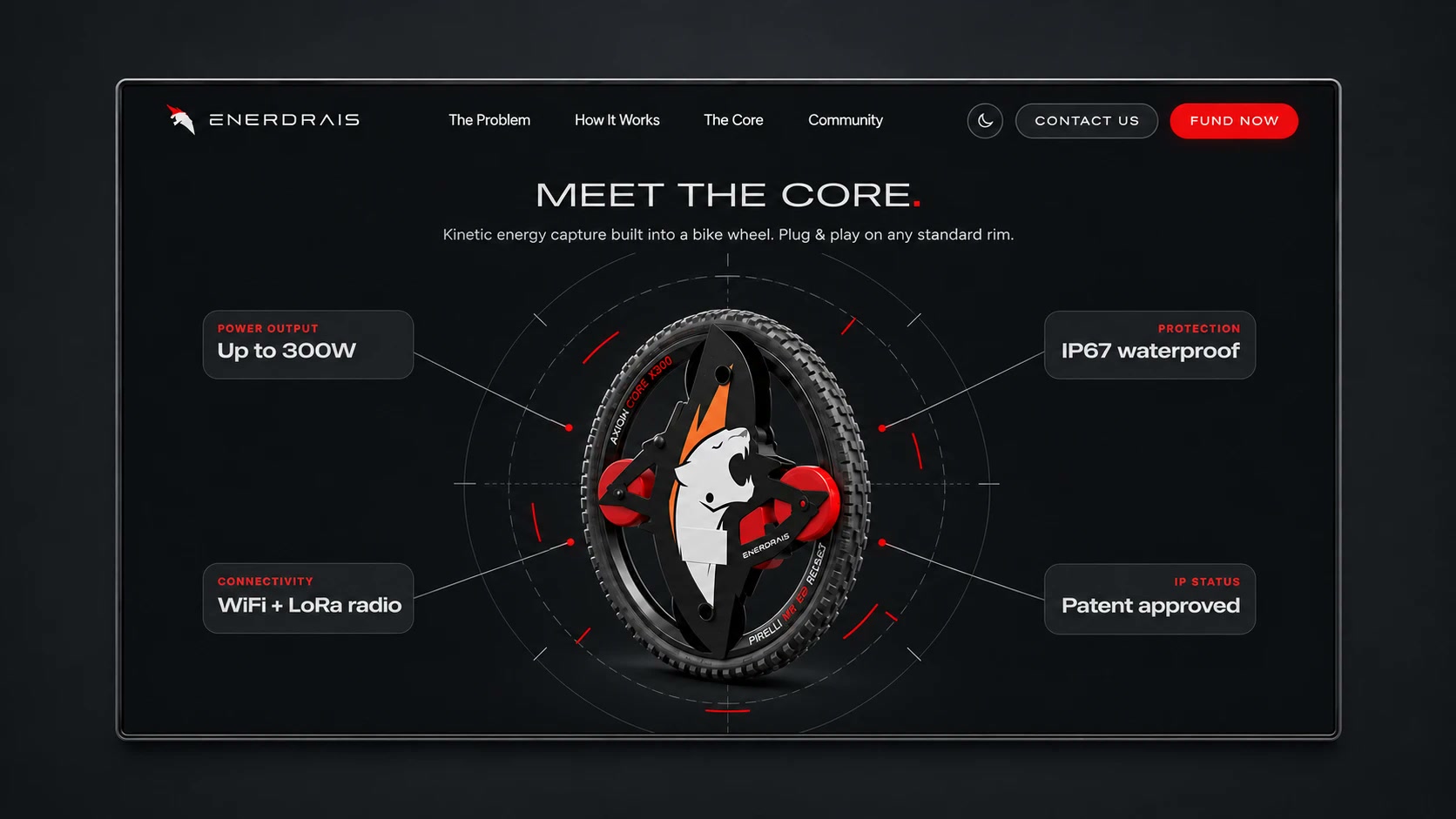
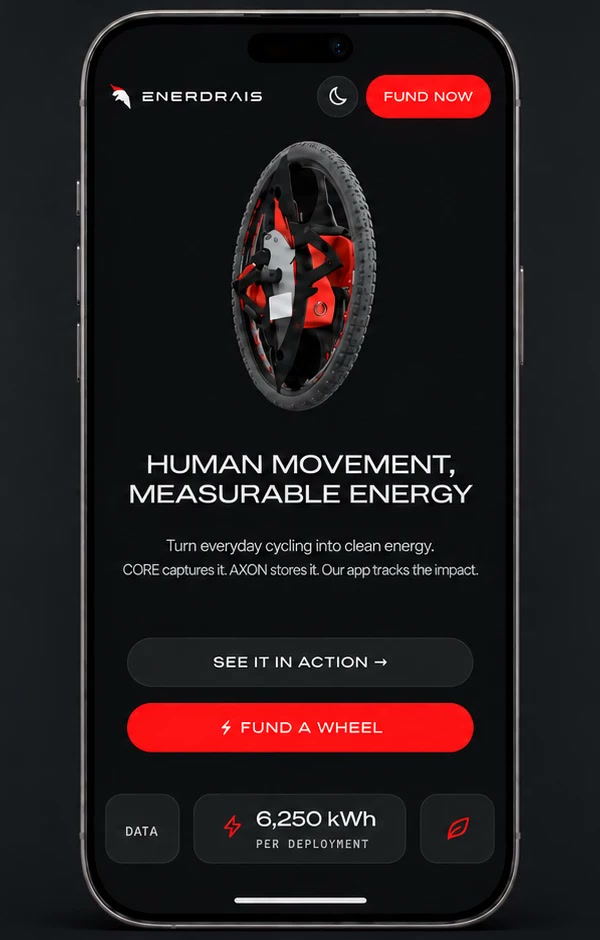
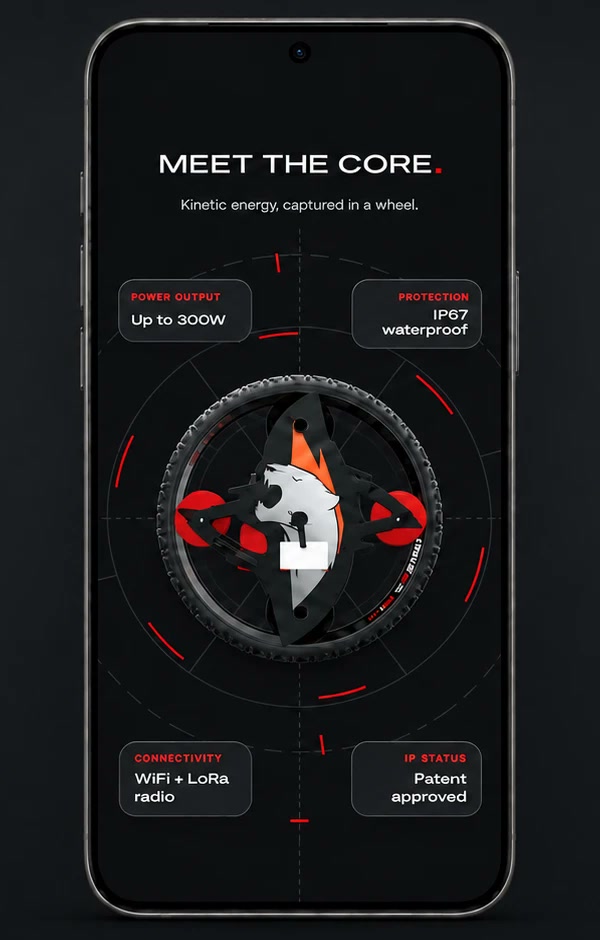
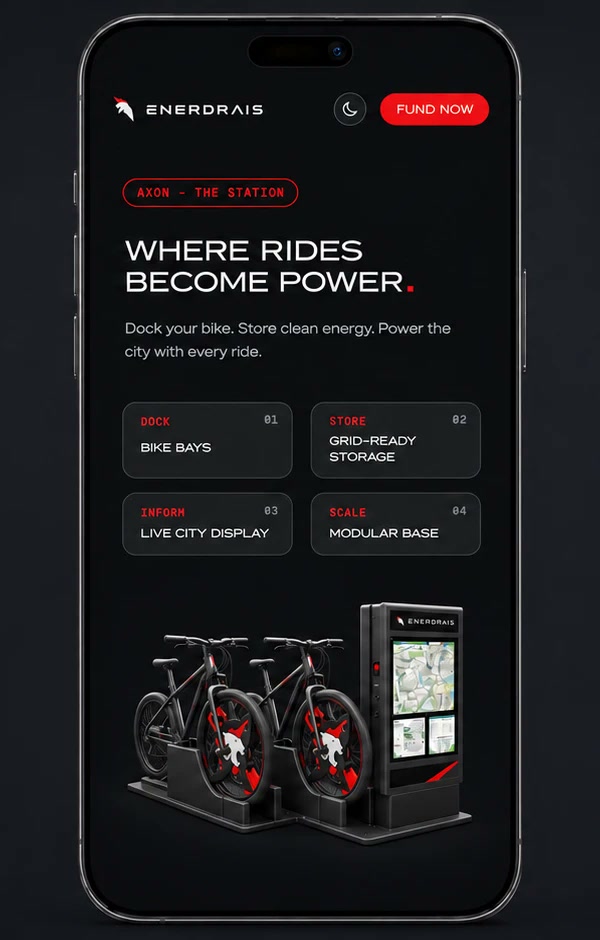
On the web the system becomes a minimal interface with a light and a dark mode: #FF1B2D for every call to action, Zalando Sans Expanded for headlines, Almarai for text. The site started from a 3D basketball store template; the ball became the real wheel, which rolls across nine scroll-snapped sections, from the problem to the Axon station and a live app demo.
Result
enerdrais.com is live, with the real wheel on every screen.
In November 2026, per the repo history, I added the team section and the Axon station section, redesigned the energy comparison and connected the site to Ulika so the team can edit copy without code.